







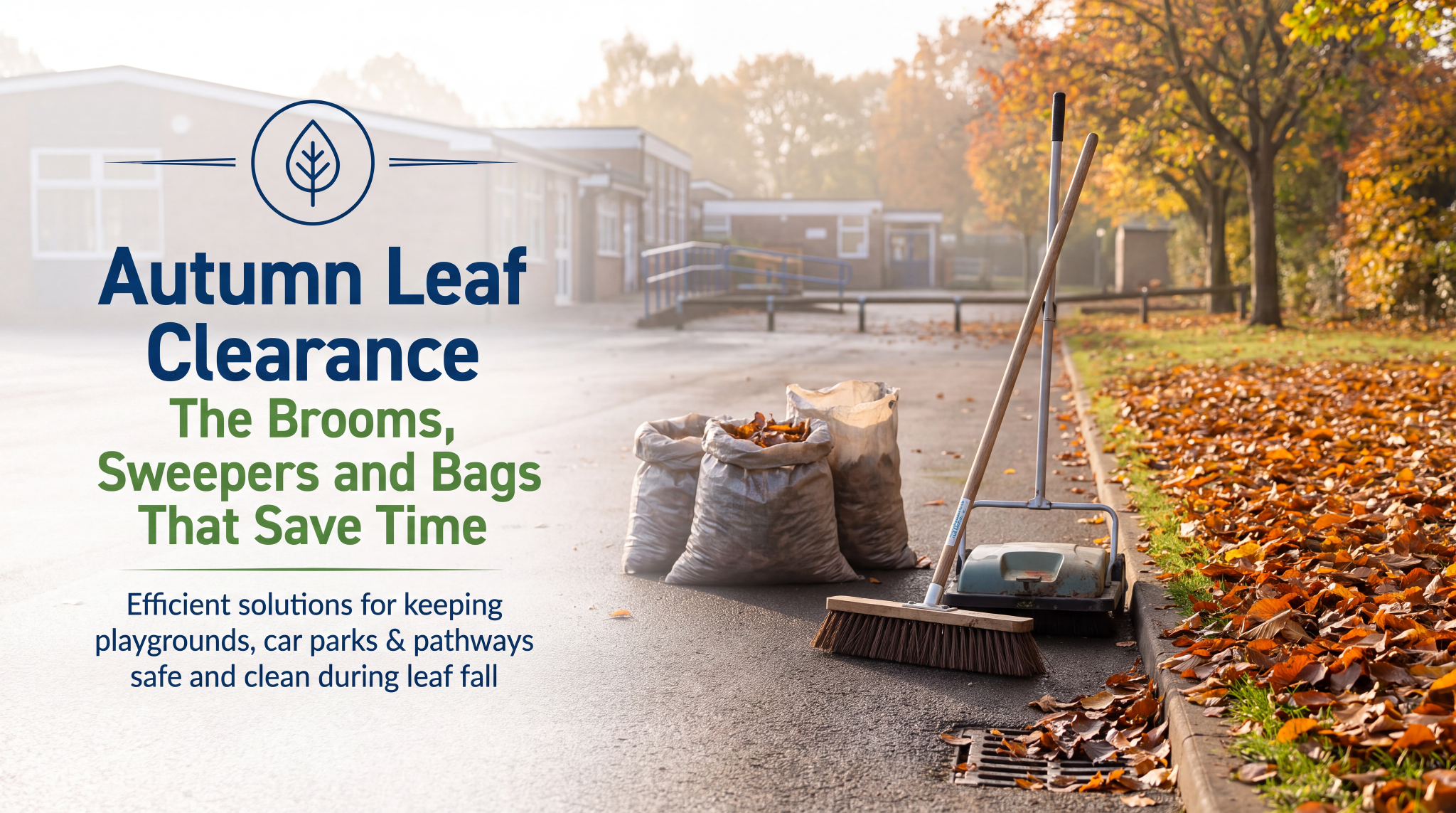
Autumn leaf clearance is one of those jobs that looks small until it gets out of hand. A few leaves on a path on Monday become a wet, slippery carpet by Friday. By half term, the playground, the car park and every drain on site are all competing for attention. Schools and commercial sites that plan their leaf clearance ahead lose far less time than those that react to the mess.
This guide covers why leaves matter, how to plan your clearance, and which brooms, sweepers and bags suit each part of a site. It is written for caretakers, site managers and school business managers who want a clear, practical approach to the autumn leaf season.
Why leaf clearance is a safety job, not just tidying
Wet leaves are slippery, and they hide what lies underneath. A path that looks fine can have a patch of leaf mulch at the top of a ramp or the bottom of a step. Pupils running between lessons will not notice it until they slip. Staff and visitors carrying bags or pushing prams face the same risk.
Leaves also block drains. A blocked drain turns an ordinary shower into a puddle across a walkway or a flooded car park bay. Leaves also tend to settle against doors and in entrance areas, where they get walked inside on wet shoes. That adds to your indoor cleaning workload and your slip risk in one go.
Finally, a deep layer of leaves can cover line markings, kerbs and fire escape routes. Keeping these routes clear is part of managing the site safely, not an optional extra.
Plan around when leaves actually fall
Leaves do not fall in one go. They come in waves through October and November, often after the first strong winds. A single big clear-up in early November will not keep up with a tree that is still dropping leaves in the last week of the month. Regular, shorter rounds work much better than one long push.
Start by listing the priority areas on your site. Entrances, ramps, steps and accessible routes come first, because a slip there causes the most harm. Next come the drains and the car park bays, then the playground, and finally the quieter edges of the grounds. Clear in that order, so the places that matter most are always the safest.
Timing helps too. Dry leaves sweep up easily, while wet leaves clump and cling to the surface. If you can, schedule your main rounds for dry spells and early mornings, before the site fills up.
Brooms: the first tool every site needs
A good broom is still the most flexible tool for leaf clearance. It reaches into corners, along kerbs and around furniture where machines cannot go. Citrus stocks a wide range of brooms in different sizes and colours, including hygiene and traditional broom heads and Vileda brooms.
Choose the head to suit the surface. A wider head covers more ground on open paving and playgrounds, while a narrower one works better around steps and planters. Check the bristles too. Heads that are too soft struggle with wet, packed leaves, and heads that are too stiff can scuff delicate surfaces.
The range of colours is useful. Many sites keep outdoor brooms separate from indoor ones, so mud and leaf debris do not travel back into classrooms and corridors. Using a different colour for outside brooms makes that rule easy to follow. Replace worn heads promptly, because a flattened broom spreads leaves around instead of lifting them.
Floor sweepers for paths and playgrounds
For longer paths and open paved areas, a manual floor sweeper can save a lot of time. It covers more ground than a broom, and it collects the leaves as it goes, so there is less bending and less bagging afterwards. Citrus lists floor sweepers in its Floorcare range, along with replacement mops and sleeves.
A sweeper suits large flat areas best. Playgrounds, covered walkways and wide entrance paths are all good candidates. Uneven surfaces and tight corners still need a broom, so most sites end up using both.
Walk-behind and ride-on sweepers for car parks
On a large car park or a big campus, hand tools start to feel slow. This is where a powered sweeper earns its place. Citrus lists both ride-on and walk-behind sweepers in its Cleaning Machines range, along with Viper sweeper accessories.
Think about how often you will use the machine before you decide. A school that clears a large car park every week through the autumn will get plenty of use from a sweeper. A smaller site may find that brooms and a floor sweeper cover the job at far lower cost. Either way, it is worth planning your machine use ahead, not waiting until the car park is already deep in leaves.
Drains, gutters and the mess that wet leaves leave behind
Leaves do not only sit on the surface. They end up in gutters, drains and corners where water collects. Clearing them early prevents the blockages that cause flooding later in the winter. Citrus lists gutter vacuums within its wet and dry vacuum range, which also includes models from Numatic, Nilfisk, Kärcher, Truvox and Viper. A wet and dry vacuum is also handy for the soggy leaf debris that collects in porches and entrance areas.
Wet leaves can also leave stains and a slippery film on paving. For stubborn marks, a pressure washer helps. Citrus lists both cold and hot pressure washers, along with accessories. Use them with care on older or delicate surfaces, and work in a way that does not push dirty water towards doors or drains. Remember that a freshly washed path is wet and slippery too, so plan the job for a quiet time.
Bags, bins and getting rid of the leaves
The leaves have to go somewhere, and that is where many sites run into trouble. Wet leaves are heavy. A bag filled to the top can be hard to lift and easy to split. Fill sacks only part way, so they stay manageable, and use strong sacks designed for heavy loads. Citrus lists a Sacks, Bins and Litter category, so check the current range for the strength and size that suit your site.
Decide where the leaves go before you start. Some sites compost them, some use a green waste collection, and others send them with general waste. Your site's arrangements will decide how many sacks you need and how often you need them emptied. Citrus also lists waste bins and recycling bins, which are useful for holding bagged leaves near the working area while you finish a round.
Staff handling wet leaves, bins and drain debris should wear gloves, and it is sensible to remind everyone about safe lifting. A short briefing at the start of the leaf season saves a lot of strained backs.
Keeping people safe while you clear
Leaf clearance often happens while the site is busy. Plan the work so that pupils, visitors and vehicles stay clear of the area you are working on. On a car park, that means clearing one section at a time so spaces and routes remain usable. In a playground, it often means clearing before the school day starts or after it finishes.
Make sure everyone knows who is responsible for each area. A simple rota that names a person for each zone stops jobs being missed and stops two people doing the same patch.
Build a simple autumn rota and order ahead
The best approach is a short, regular routine. Assign each zone to a named person. Agree which days are for main rounds and which are for quick checks after bad weather. Keep a note of which areas collect the most leaves, because the same trees and corners tend to cause problems every year.
Half term is also a useful window. With pupils off site, you can clear the playground, the car park and the main drains without working around a busy school day. Use that week for the bigger jobs, such as drain clearing or a pressure wash of stained paving, and keep the regular rounds for the weeks either side.
Finally, check your kit before the leaves come down. Brooms wear out, sacks run low and machines need to be ready. Ordering in early autumn means the right tools are on site when the first big fall arrives. Sites that wait until the weather turns often find themselves reaching for a worn broom and the last few sacks in the store.
Frequently Asked Questions
What is the best tool for clearing leaves from a school playground?
A mix works best. Brooms handle corners, steps and edges, while a floor sweeper covers the open paved areas quickly. A powered sweeper only makes sense for very large sites.
How often should leaves be cleared in autumn?
Little and often. Leaves fall in waves through October and November, so regular short rounds, with extra checks after windy or wet weather, keep paths and drains safe.
Are wet leaves really a slip risk?
Yes. Wet leaves form a slippery layer that hides the surface beneath, especially on ramps, steps and smooth paving. Clearing entrances and accessible routes first reduces the risk where it matters most.
Do I need a machine to clear a car park?
Not always. A smaller car park can be managed with brooms and a floor sweeper. A walk-behind or ride-on sweeper becomes worthwhile when the area is large and you clear it often.
What should I do with the leaves once they are bagged?
Decide your disposal route in advance. Some sites compost, some use a green waste collection and some send leaves with general waste. Your route decides how many sacks you need and how often you need them emptied.