





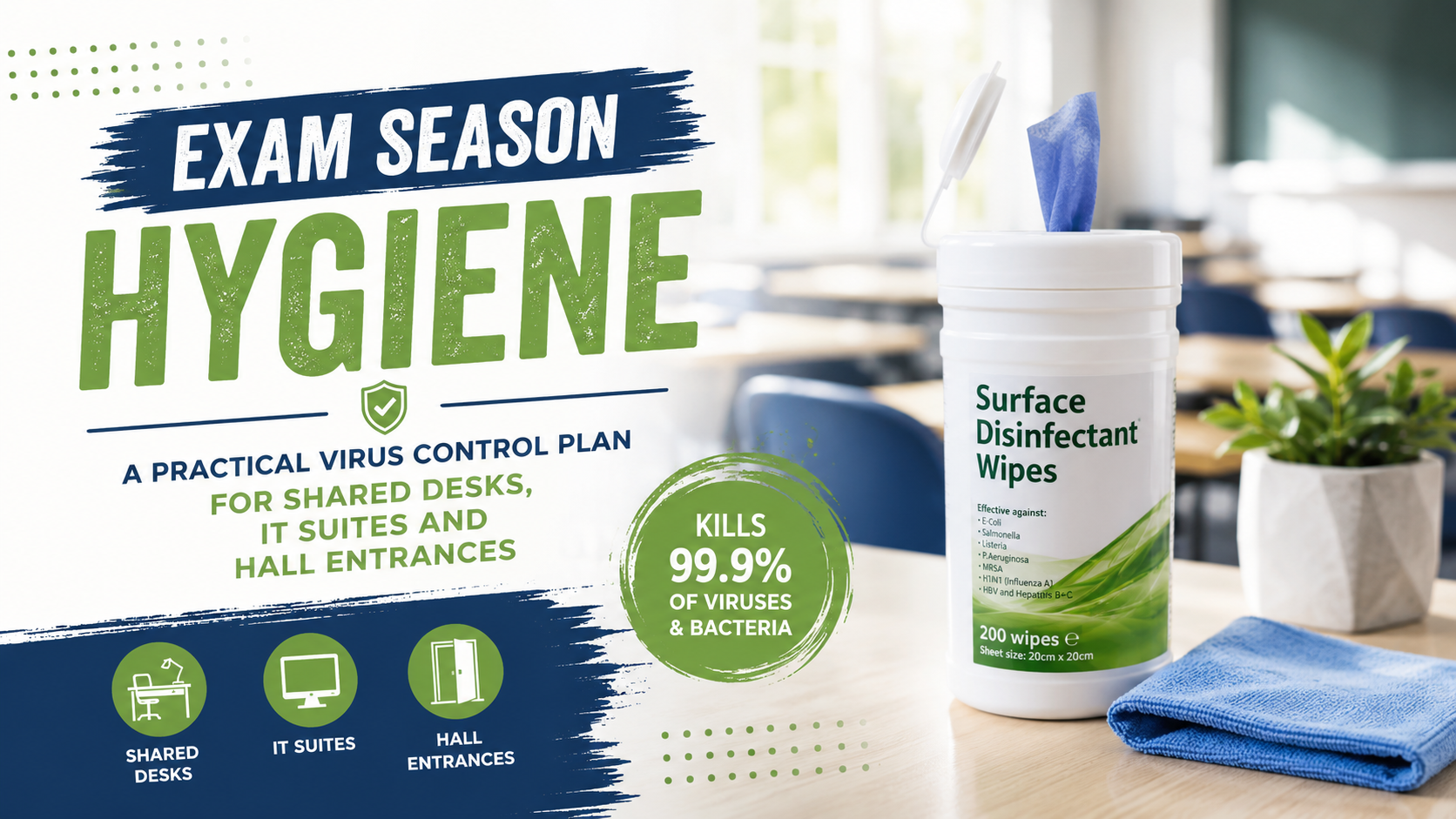
Exam season puts unusual pressure on school buildings. Desks are used by different pupils throughout the day, IT suites become busier, halls see higher footfall and entrances handle more visitors, invigilators, staff and students. As a result, exam season hygiene needs a clear plan rather than an occasional wipe-down.
At Citrus Cleaning Supplies, we see school hygiene as a practical system. The aim is not to overcomplicate cleaning or disrupt exams. Instead, the goal is to identify the highest-risk touchpoints, choose suitable virus control products, and make cleaning routines easy for caretakers, cleaners, office teams and site staff to follow.
Government guidance for schools recommends cleaning surfaces that people touch frequently, and regular cleaning and disinfection of areas that come into contact with food, dirt or bodily fluids. It also recommends cleaning schedules that clearly describe what needs doing, how often it happens and who is responsible.
That is exactly the approach schools need during exam periods.
Why exam season needs a separate hygiene plan
Normal school cleaning routines often focus on classrooms, washrooms, corridors and dining areas. During exams, however, the building changes. Large numbers of pupils may sit in the same hall throughout the day. Shared desks and chairs move between sessions. IT rooms may host online assessments, revision sessions or access arrangements. Meanwhile, reception and hall entrances become busy control points.
For this reason, exam cleaning should focus on three priorities:
- reducing contamination on shared surfaces
• protecting high-traffic entrance points
• supporting hand hygiene before and after exams
This does not mean every surface needs constant disinfection. However, high-touch areas need more attention because more people use them in a shorter period.
Step one, map the exam touchpoints
A useful school hygiene plan starts by mapping the areas that change during exam season. Site teams should walk the route a pupil, invigilator or visitor takes from arrival to leaving the exam room.
Common touchpoints include:
- entrance door handles and push plates
• reception counters and sign-in areas
• handrails near halls and stairwells
• exam desks and chair backs
• IT keyboards, mice and desk surfaces
• water stations and shared equipment
• toilet doors, taps and flush handles
• hall exits and queue areas
Once these areas are listed, the cleaning schedule becomes much easier to manage. In addition, it helps procurement teams order the right mix of virus control wipes, disinfectant sprays, hand sanitiser and PPE before the busy period starts.
Step two, choose the right products for each area
Shared desks and exam halls
Exam desks need a product that is quick, practical and suitable for repeated surface cleaning. For many schools, disinfectant wipes are the easiest option because they are portable, pre-dosed and simple to use between sessions.
Citrus’s virus control wipes category includes options for workplaces, schools, healthcare and hospitality settings. The guidance highlights education and childcare use, noting that schools and nurseries benefit from easy-to-use wipes that help reduce contamination in classrooms and communal areas.
A useful product example is Capital V-Wipe Sanisafe 4C Antiviral Wipes X 100. Citrus lists these within its virus control wipes range, alongside other options such as Capital Sanisafe Antibacterial Wipes X 72 and Ecotech Anti Bac Surface Disinfectant Wipes X 200.
For exam halls, wipes can support a simple routine: clean desks before the first session, refresh touchpoints between sittings, and complete a fuller clean at the end of the day.
IT suites and shared equipment
IT suites need more care because electronics do not respond well to overspray or excess liquid. Therefore, staff should avoid spraying disinfectant directly onto keyboards, mice, screens or devices. Instead, use a suitable wipe or lightly dampened cloth, and always check equipment manufacturer guidance.
For shared keyboards and mice, the safest routine is usually:
- remove visible debris first
• use an appropriate disinfectant wipe without soaking the equipment
• avoid squeezing liquid into keys or ports
• allow surfaces to dry before use
• keep screen cleaning separate from desk disinfection
This is where product choice matters. Citrus’s virus control wipes guidance advises checking active ingredients, surface compatibility and dwell time so teams choose wipes that suit the surface being cleaned.
If a school uses specialist IT equipment, it may also need separate screen cleaners and microfibre cloths for non-virus cleaning tasks.
Hall entrances and reception points
Entrances need a slightly different setup. During exam season, pupils arrive in groups, visitors sign in and invigilators move between rooms. As a result, hand hygiene at the entrance becomes just as important as surface cleaning.
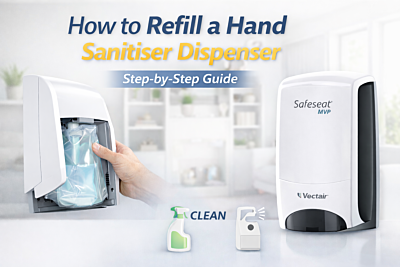
Citrus stocks a range of sanitiser dispensers and stands designed for virus control in workplaces, educational facilities and public environments. These include touch-free stands and dispensers that encourage regular hand hygiene and help reduce germ spread.
For example, the Quattro QDHS Hand Sanitiser Dispensing Station includes a floor stand and dispenser, uses sensor technology to dispense a measured dose, and has a 1.2 litre capacity for small, medium or high-traffic areas.
This type of station works well near hall entrances, main reception, exam sign-in points and staff access routes.
Step three, build a simple exam cleaning schedule
A strong exam room cleaning checklist should be easy to follow. If the schedule is too complicated, it will not survive a busy day.
A practical daily structure could look like this.
Before the first exam
Clean and disinfect desks, chair backs, door handles, push plates, handrails and sign-in surfaces. Check that sanitiser stations are full and wipes are available for staff use. Make sure bins are empty and washrooms are stocked with soap, hand towels and toilet tissue.
Between exam sessions
Focus on shared desks, chair backs, door handles, water points and any equipment that has changed users. Keep this stage quick and targeted, especially where turnaround time is short.
At the end of the day
Carry out a fuller clean of the hall, IT suite, entrances and connected washrooms. Restock wipes, sanitiser, paper products and PPE ready for the next day.
NHS cleaning standards state that disinfectants must remain in contact with surfaces for the specified time and that surfaces need to stay wet for that time. Therefore, cleaning teams should know the contact time for the products they use, especially when cleaning between sessions.
Step four, support staff with PPE and training
Exam hygiene plans depend on people, not just products. Cleaning staff, caretakers and support teams need to know which products to use, where to use them and how to avoid cross-contamination.
A basic exam season kit should include:
- virus control wipes
• ready-to-use disinfectant spray
• disposable or colour-coded cloths
• gloves and aprons where required
• hand sanitiser refills
• paper hand towels and soap refills
• waste bags and bin liners
• clear cleaning checklists
PPE should match the product label and task risk. For most routine surface cleaning, gloves may be enough. However, stronger products, larger spill clean-ups or higher-risk tasks may require additional protection.
Citrus stocks virus control products, PPE, disinfectants, dispensers, sanitisers and wipes under its virus control range, making it easier for B2B buyers to build a complete school hygiene system from one supplier.
Step five, use stronger disinfectants where needed
Wipes are useful, but they are not the only answer. For larger surfaces, end-of-day cleaning or outbreak response, a ready-to-use disinfectant or concentrated virucidal disinfectant may be more appropriate.
Greyland Spray & Wipe Ultra is one relevant product in the Citrus range. It is described as an aldehyde-free, high-performance disinfectant with broad-spectrum activity against bacteria, yeast and viruses, and is suitable for schools, sports facilities, hotels and other areas during infection outbreaks.
Another option is Selden Selgiene Ultra, which Citrus describes as a cleaner and sanitiser solution that kills a variety of germs, bacteria and viruses including Coronavirus, HIV, Hepatitis C and Influenza.
For larger sites, concentrates can also help manage cost and stock. Clover Ultra Xtreme is listed by Citrus as a concentrated virucidal, bactericidal and yeasticidal disinfectant tested to BS EN 1276 and BS EN 14476, suitable for washable surfaces and food preparation areas.
The key is to match product strength to the task. A quick desk refresh and a full end-of-day hall clean may need different formats.
Step six, keep hand hygiene visible
Surface cleaning works best when pupils and staff also clean their hands. During exams, schools should place hand sanitiser where it supports natural movement, not where it gets ignored.
Good locations include:
- main school entrance
• exam hall entrance
• IT suite doorway
• reception desk
• staff invigilation area
• corridor outside washrooms
Touch-free dispensers can help because they reduce unnecessary contact and make hand hygiene quicker. Citrus’s dispenser and stand range is designed for workplaces, educational facilities and public environments, which makes it relevant for schools preparing for high-traffic exam periods.
However, sanitiser should not replace soap and water. Washrooms still need reliable soap systems, hand towels or dryers, and regular stock checks during peak periods.
Common mistakes to avoid
Even good schools can lose hygiene control during exam season if routines are unclear.
Avoid these common issues:
- spraying disinfectant directly onto keyboards or screens
• wiping surfaces before the correct contact time has passed
• using the same cloth across toilets, halls and IT areas
• leaving sanitiser stations empty during peak arrival times
• relying only on end-of-day cleaning when multiple exam sessions run
• storing strong products where pupils can access them
• ordering wipes too late and running out mid-week
Each of these problems is avoidable with planning. In practice, the best exam hygiene systems are simple, visible and well stocked.
People also ask
What should schools clean during exam season?
Schools should focus on shared desks, chair backs, door handles, push plates, IT equipment, handrails, water points, hall entrances and connected washrooms. These areas see repeated contact during exam periods.
How often should exam desks be disinfected?
Exam desks should be cleaned before the first session and refreshed between sessions where different pupils use the same furniture. A fuller clean should take place at the end of the day.
Can disinfectant wipes be used on keyboards?
Some wipes can be suitable, but schools should check surface compatibility and avoid excess liquid. Staff should never spray disinfectant directly onto keyboards, mice or screens.
What products help with virus control in schools?
Useful products include antiviral wipes, ready-to-use disinfectant sprays, hand sanitiser stations, soap systems, paper products, gloves and PPE. Larger sites may also benefit from concentrated disinfectants and ATP verification systems.
Final thoughts
A practical exam season hygiene plan does not need to slow the school day down. It simply needs to focus on cleaning effort where the risk and traffic are highest.
Shared desks, IT suites and hall entrances all need attention because they are used repeatedly by different people. However, each area needs a slightly different approach. Desks need quick surface disinfection. IT suites need careful product compatibility. Entrances need visible hand hygiene. Washrooms need reliable stock and routine checks.
At Citrus Cleaning Supplies, the most effective virus control plans are usually the clearest ones. They use the right wipes, disinfectants, sanitisers, PPE and paper products in the right places, supported by simple schedules staff can actually follow.
During exam season, that clarity matters. It helps protect pupils, staff and visitors while keeping the building calm, organised and ready for the next session.