






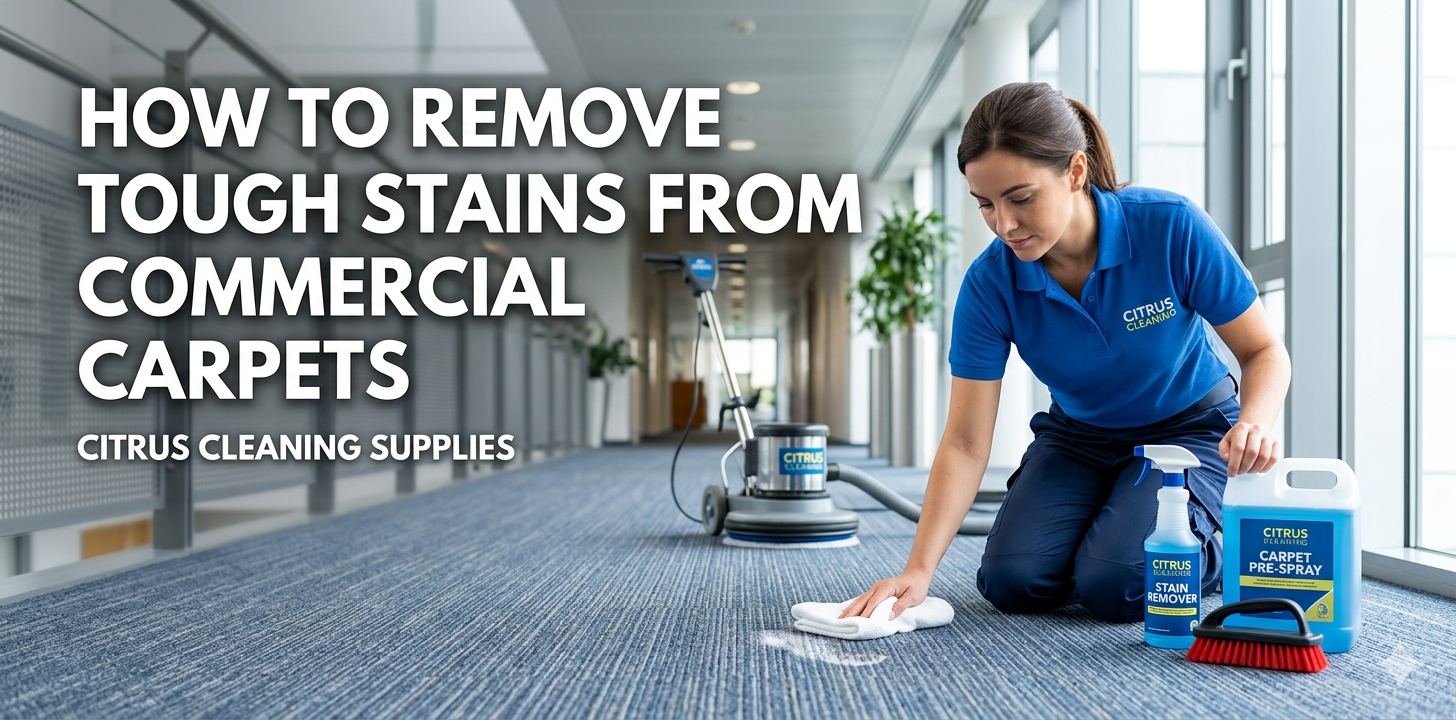
The complete guide to commercial carpet stain removal — stain types, the right products, step-by-step technique, and a maintenance routine that keeps carpets looking professional for longer.
- Why commercial carpets are different
- The golden rules of stain removal
- Understanding stain types
- Step-by-step stain removal process
- The most common commercial carpet stains
- Choosing the right products
- When to use a carpet cleaning machine
- Maintaining carpets between deep cleans
- Frequently asked questions
Commercial carpets take a beating. Offices, hotels, care homes, schools, and retail environments all share the same problem — heavy foot traffic, frequent spills, and ground-in dirt that ordinary cleaning simply cannot shift. When a stain is left untreated, it sets into the fibres, attracts more dirt, and becomes a permanent eyesore that reflects poorly on your business.
The good news is that most tough stains on commercial carpets — even the ones that look hopeless — can be removed with the right products and the right technique. This guide covers everything you need to know, from identifying stain types to choosing the correct products from our carpet cleaning range.
Why Commercial Carpets Are Different
Commercial carpets are typically made from nylon, olefin (polypropylene), or polyester — each behaves differently when it comes to cleaning chemicals and technique. Knowing your fibre type before treating a stain matters enormously.
| Fibre Type | Common Use | Key Cleaning Notes |
|---|---|---|
| Nylon | Offices, hotel corridors, high-traffic areas | Durable. Handles hot water extraction well. Sensitive to pH — use pH-appropriate chemicals. |
| Olefin (Polypropylene) | Entranceways, retail, hospitality | Stain-resistant but attracts oily soils. Requires specific degreasers to lift greasy marks. |
| Polyester | Hotels, offices, softer environments | Colourfast and soft. Less resilient than nylon. Avoid harsh scrubbing or excessive heat. |
| Wool | Premium hotels, boardrooms | Delicate. Use wool-safe pH-neutral products only. Never use hot water or alkaline chemicals. |
The Golden Rules of Commercial Carpet Stain Removal
- Act fast. Fresh stains are always easier to remove. The first 24 hours are critical — once a stain bonds with carpet fibres and dries, you are working against chemistry as well as dirt.
- Blot, never rub. Rubbing spreads the stain and pushes it deeper into the fibre. Always blot from the outside of the stain inwards using a clean, dry cloth.
- Remove solids first. For food spills or mud, carefully lift any solid material before applying liquid. Applying liquid to a solid stain simply spreads it further.
- Use minimum product. Oversaturating causes moisture to penetrate the backing and underlay, leading to mould and wicking — where deep-seated dirt travels back up through the fibres as the carpet dries.
- Rinse and neutralise. After treating a stain, always rinse with clean water and blot dry. Detergent residue left in the carpet attracts fresh dirt and accelerates resoiling.
Understanding Stain Types: Why It Matters
Different stains require different chemistry. Identify the stain type before reaching for any product — using the wrong product on the wrong stain can make it significantly harder to remove.
Step-by-Step: How to Remove a Tough Stain from a Commercial Carpet
- Contain the stain immediately. Place absorbent towels around the stain to stop it spreading. Press a dry cloth firmly onto the surface to absorb as much liquid as possible without pushing it deeper.
- Identify the stain type. Use the categories above to select the correct product chemistry before applying anything. The wrong product on the wrong stain can make it worse.
- Patch test your product. Apply a small amount to a hidden area, leave for two minutes, and confirm no adverse reaction before treating the visible stain.
- Apply your pre-spray or spotter. Spray directly onto the stain — do not saturate. Allow the product to dwell for the manufacturer's recommended time, typically two to five minutes. This dwell time is critical — it allows the chemistry to break down soiling before extraction.
- Agitate gently if required. For embedded stains, use a soft brush to work the product lightly into the fibres. Never scrub aggressively — this damages the pile and spreads the stain.
- Blot or extract. Remove the product and dissolved stain using a clean cloth (blotting from the outside inwards) or a wet vacuum. For best results, use hot water extraction from our cleaning machines range.
- Rinse with clean cold water. Apply a small amount of clean water and blot to remove remaining product residue. This prevents rapid resoiling.
- Dry thoroughly. Absorb as much moisture as possible with a dry cloth, then ventilate the area. A carpet air mover or fan speeds drying and prevents wicking.
The Most Common Commercial Carpet Stains — And How to Treat Them
Choosing the Right Carpet Cleaning Products
Our carpet cleaning range covers every stain type and commercial application:
- Pre-sprays and traffic lane cleaners — For high-traffic areas and general soiling prior to extraction. A good pre-spray emulsifies ground-in dirt and reduces extraction time significantly.
- Spot and stain removers — For treating specific stains quickly and precisely. Available in enzyme-based, solvent-based, and oxygen-activated formulations.
- Carpet deodorisers and sanitisers — Essential for care homes, nurseries, and schools. Removes odours as well as visible soiling.
- Dry carpet cleaning products — For carpets that cannot be wet-cleaned. Apply, agitate, and vacuum out. Ideal for areas that must remain in use during cleaning.
- Carpet protectors — Applied after cleaning to repel future spills and make stain removal easier. Essential for high-traffic and hospitality environments.
- Prochem Natural Range — Trusted by professional carpet cleaners across the UK. Powerful biodegradable formulations for businesses with environmental commitments.
When to Use a Carpet Cleaning Machine
Spot treatment handles individual stains, but for a commercial carpet that has seen months of heavy use, periodic deep cleaning with an extraction machine makes a significant difference. Hot water extraction injects cleaning solution deep into the pile under pressure, then extracts it along with dissolved soiling — reaching dirt that spot treatment alone cannot address.
Our commercial cleaning machines range includes both purchase and lease options. A machine pays for itself quickly in reduced professional cleaning costs and extended carpet life.
Maintaining Commercial Carpets Between Deep Cleans
- Vacuum daily in high-traffic areas. Loose soil and grit grind into carpet fibre with every footstep, causing permanent wear. Daily vacuuming removes these particles before they cause damage.
- Treat spills immediately. Post clear instructions for staff. A blot-first approach, even without chemicals, makes subsequent treatment far more effective.
- Use entrance matting. A significant proportion of carpet soiling is tracked in from outside. Good entrance matting from our floorcare range reduces the amount of dirt reaching the carpet.
- Schedule regular deep cleans. Most commercial environments benefit from full hot water extraction every three to six months. High-traffic areas may require cleaning every six to eight weeks.
- Apply carpet protector after every deep clean. Carpet protectors extend the time between deep cleans by preventing stains from bonding immediately with the fibre.