







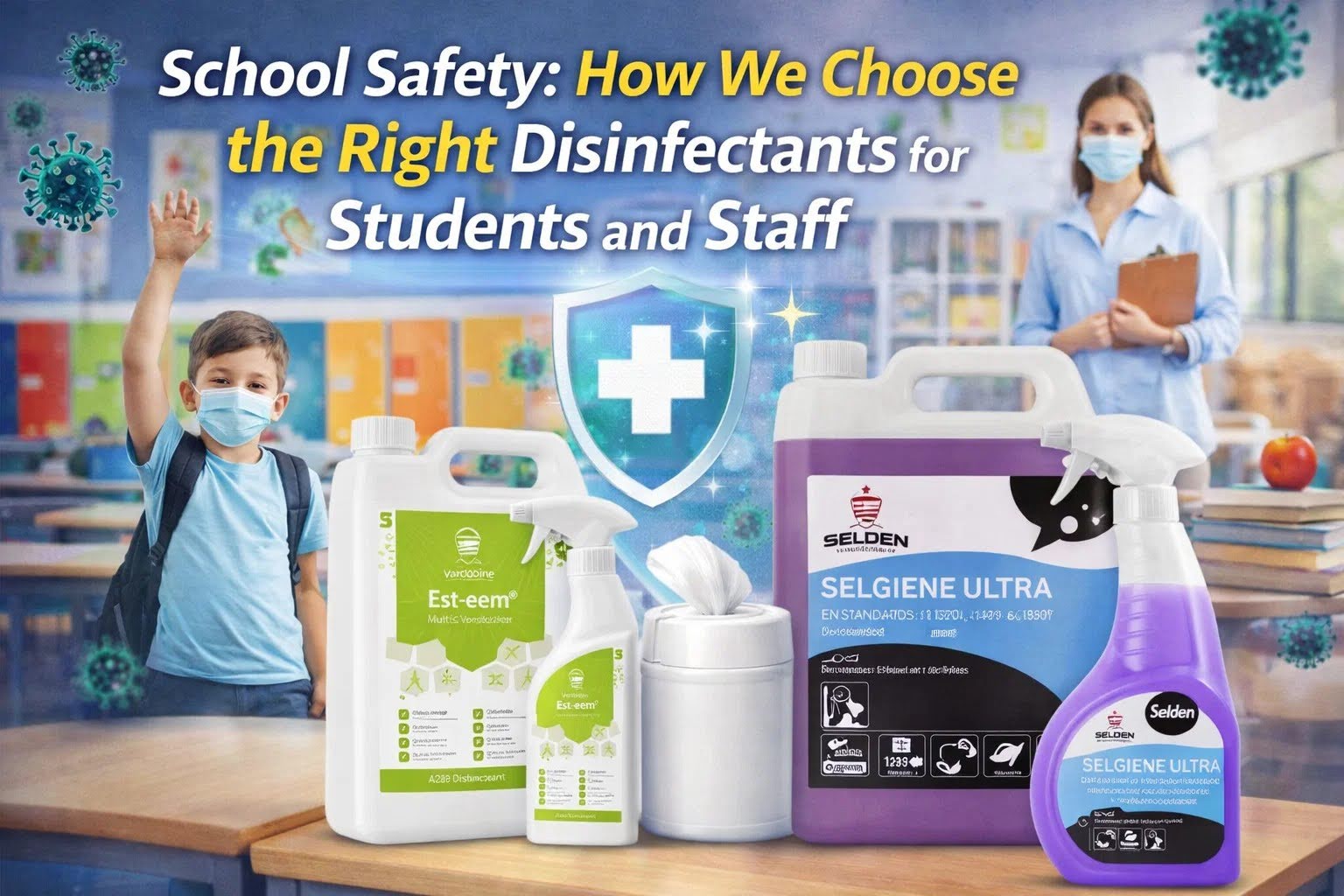
We know schools have a very specific cleaning challenge. Classrooms, corridors, canteens, washrooms and staff rooms all need different levels of hygiene, yet the products still have to be practical for busy teams to use every day. That is why we never think about school cleaning as “find the strongest disinfectant and use it everywhere”. We think about it as building a simple, safe system that keeps standards high without making daily cleaning harder than it needs to be.
In our experience, the best school cleaning routines are the ones that are easy to repeat. You need clear product choices, realistic contact times, sensible storage, and a cupboard that is not full of half-used bottles doing almost the same job. Our own school guidance follows that same principle: clean first, use disinfectant on a risk basis, and keep the product range rationalised so training, compliance and day-to-day use stay manageable.
That matters because schools are shared spaces. Desks, door handles, handrails, toilets and dining areas all see constant traffic. Government guidance for schools advises regular cleaning of high-touch surfaces and regular disinfection of areas that come into contact with food, dirt or bodily fluids. It also recommends clear cleaning schedules, trained staff and the right PPE. In other words, the goal is not to disinfect blindly. The goal is to disinfect where it matters most, and to do it properly.
What we look for in a good school disinfectant
When we help schools choose products, we start with suitability. A good school disinfectant should match the environment where it is being used. Classrooms need something practical for hard surfaces and touchpoints. Kitchens and canteens need food-safe products. Washrooms may need a tougher option for toilets and drains. Using one product for every area usually creates compromises somewhere.
We also look closely at contact time. A disinfectant only works when the surface stays wet for the required time. That sounds obvious, but it is one of the most common mistakes in real cleaning routines. If a team sprays and wipes immediately, the product may not do the job it claims on the label. That is why we prefer products with realistic contact times and straightforward instructions, especially in schools where cleaning teams need speed as well as consistency.
Another big factor is the working environment itself. In occupied buildings such as schools, low-odour or perfume-free options are often the better choice for general areas. Our own school cleaning content highlights low-fragrance or fragrance-free products as helpful for sensitive pupils and staff, and that fits with how many sites now want to manage indoor air quality alongside hygiene.
Finally, we think about control. HSE guidance is very clear that cleaning chemicals need proper storage, training and risk assessment under COSHH. For schools, that means choosing products that staff can use correctly, storing them securely away from children, and making sure teams know when to clean, when to disinfect, and when to step up to a stronger product for a specific incident.
Our practical school disinfectant system
Rather than recommending seven overlapping products for every site, we prefer a simpler model. Most schools can cover their needs well with a daily cleaner, a routine disinfectant, a quick-response wipe, a food-safe sanitiser, a targeted washroom disinfectant, and a hand hygiene product.
1. Daily classroom and corridor cleaning
For general day-to-day cleaning, we would not start with the harshest disinfectant in the cupboard. Routine soil still needs to be removed first, and our own school guidance stresses that disinfectant is not a universal substitute for cleaning. A neutral product such as Evans High Class Neutral Surface Cleaner makes sense for daily maintenance of hard surfaces and floors because it is designed for regular use across a wide range of finishes. It works well for damp mopping or spray-and-wipe cleaning without dulling gloss surfaces.
Where routine disinfection is also needed, an option like Clover Mida Lufragerm Plus is often a practical fit. It is perfume-free, odourless, suitable for hard surfaces, and has a 60-second contact time, which makes it easier to use consistently in busy education settings. If the site needs a broader virucidal option, Quattro Q-Eco V-Clean Rapid is another strong choice from our range. It is a concentrated disinfectant with proven virucidal and bactericidal performance, kills enveloped viruses in 60 seconds, and can produce up to 80 trigger bottles from one 5-litre container, which helps schools manage cost-in-use as well as hygiene.
2. High-touch points and quick-response cleaning
Schools also need something fast for the moments between the main cleans. That usually means reception counters, classroom door plates, stair rails, shared keyboards, photocopiers, library desks and staff-room touchpoints. For these jobs, wipes can be extremely useful because they are quick, portable and consistent. Government school guidance specifically calls for attention to high-touch surfaces, and that is exactly where a ready-to-use wipe earns its place.
A good example from our range is Capital V-Wipe Sanisafe 4C Antiviral Wipes. They are quick-drying, ready to use, suitable for both hands and surfaces, and described on our site as popular in schools and other public settings where rapid decontamination matters. We would normally keep this type of product with staff, caretaking teams or reception rather than using it as a substitute for the whole cleaning programme. It is a support product, not the entire system.
3. Kitchens, canteens and food tech rooms
Food areas need their own approach. In kitchens, canteens and food teaching spaces, the disinfectant must be suitable for food-contact environments, and teams must follow food hygiene standards and manufacturer instructions. This is one area where it is worth being very specific about product choice rather than reaching for the same spray used in a corridor or classroom.
From our range, Evans EST-EEM Kitchen Cleaner & Disinfectant is designed for food preparation and catering environments, is unperfumed, and is formulated for use on food-contact surfaces, floors, walls and catering equipment. It passes key EN standards for bactericidal, yeasticidal and virucidal performance. Selden Selgiene X is another strong fit, with food-safe non-rinse applications, EN 1276 testing, and suitability for schools and kitchens where hygiene is critical. These are the kinds of products we would point schools towards for dining areas and back-of-house catering spaces because they are built for that environment rather than adapted to it.
4. Washrooms and incident cleaning
Washrooms are different again. Toilets, urinals, sinks and drains often need a tougher product because the type of soil and contamination is different. This is where bleach still has a place, but we would use it selectively rather than as the default answer for the entire site. Our own school cleaning guidance supports targeted disinfectant use, and public safety guidance is clear that bleach needs careful handling, good ventilation and secure storage. It should never be mixed with acidic or ammonia-based cleaners.
For those tougher washroom jobs, Quattro Thick Bleach 5L is designed to cling to surfaces for longer contact, and is intended for toilets, urinals, drains and sinks. It sanitises and deodorises, which makes it useful for heavy-duty washroom hygiene. That said, it should be treated with respect. HSE advises safe storage, task-appropriate PPE and ventilation, while GOV.UK warns that inappropriate mixing with other cleaners can release harmful gases. In schools, that means clear procedures, trained staff and keeping bleach locked away from pupils.
5. Hand hygiene still matters
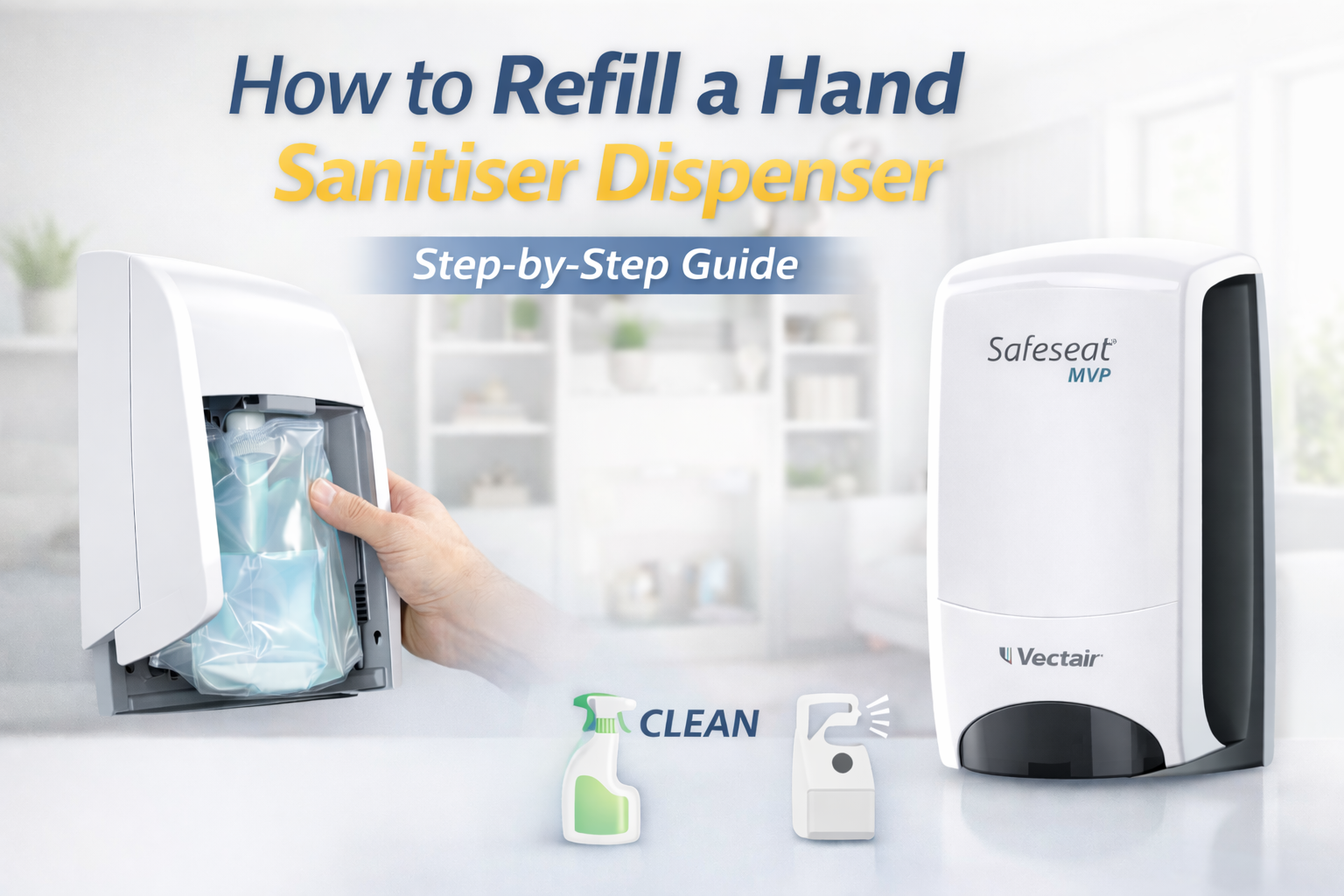
Surface disinfection is important, but it works best when it sits alongside good hand hygiene. In schools, that means a reliable soap-and-sanitiser setup, especially in washrooms, reception points and dining areas. Our soap and skin care range is designed for busy commercial and education environments, and refillable systems make it easier to stay stocked without creating unnecessary plastic waste.
For sanitiser stations, EVANS Handsan Alcohol Hand Sanitiser is a practical option from our range. The product page states that it contains 70% alcohol with added moisturiser, evaporates without residue, and is for use on visibly clean hands. That last point matters. Sanitiser is useful, but when hands are actually dirty, staff and pupils still need soap and water first. We always see hand hygiene as a support to surface cleaning, not a replacement for it.
How we would choose products for a school site
If we were reviewing a school cleaning cupboard, we would start by simplifying it. One of the biggest problems in education settings is product drift: too many sprays, too many legacy bottles, and too much guesswork. Our own school content recommends rationalising the range because it reduces waste, makes training easier and improves COSHH management. In practice, that usually means a daily cleaner, a routine disinfectant, a dedicated kitchen sanitiser, a washroom product, and hand hygiene supplies.
We would also favour concentrates where it makes sense. Concentrates reduce packaging, storage pressure and delivery volume, but only if they are used with clear dosing control. A strong example is Quattro Q-Eco V-Clean Rapid, which can deliver up to 80 trigger bottles from a 5-litre container. That is the kind of product that can help a school manage both hygiene and budget, provided the team is trained to dilute it properly.
Fragrance is another decision point. In school settings, heavily perfumed products can be the wrong fit, especially in classrooms and learning areas. That is why we often lean towards perfume-free or unperfumed options such as Mida Lufragerm Plus or Evans EST-EEM for the areas where those products are appropriate. You still get hygiene performance, but with a gentler profile for day-to-day use.
And, of course, we would always check the practical side: the SDS, the contact time, the intended surface, the storage needs, and whether the product is realistic for the staff actually using it. HSE makes clear that an SDS does not replace a COSHH assessment, and that employers need to communicate hazards, risks and control measures properly. Good product choice is only part of the picture; good implementation matters just as much.
Safe disinfection practices we would always recommend
No matter which products a school chooses, a few rules should stay the same.
First, clean visible dirt away before disinfecting. Dirt can stop disinfectants working properly, so routine cleaning remains the foundation of a hygienic site.
Second, focus on risk. High-touch points, food-contact surfaces, bodily fluid incidents and outbreak periods deserve more attention than low-risk areas. That is a far better system than trying to treat every surface in the building as if it carries the same risk.
Third, follow contact times exactly. If the label says one minute or five minutes, that time matters. The surface needs to stay wet for the product to do the job claimed on the pack.
Fourth, keep chemicals controlled. Use colour-coded equipment where possible, train staff, provide PPE when required, keep rooms ventilated, and lock products away from pupils. HSE specifically notes safe storage, ventilation and task-appropriate protective equipment, while school infection guidance recommends training, cleaning schedules and colour coding as good practice.
Finally, never mix products to “make them stronger”. Bleach mixed with acidic or ammonia-based products can release harmful gases. Strong cleaning is not about cocktails. It is about using the right chemistry in the right place, at the right dilution, for the right contact time.
Final thoughts
At Citrus Cleaning Supplies, we believe the best school disinfectant strategy is the one that is clear, practical and sustainable. Schools do not need the harshest possible product on every desk, every day. They need the right products for classrooms, kitchens, washrooms and touchpoints, backed by good routines and proper training.
That is why we would build a school cleaning system around a sensible mix: a daily cleaner such as Evans High Class, a routine hard-surface disinfectant such as Clover Mida Lufragerm Plus, a broader virucidal option such as Quattro Q-Eco V-Clean Rapid, quick-response V-Wipe Sanisafe 4C wipes for high-touch areas, a food-safe kitchen product such as Evans EST-EEM or Selden Selgiene X, targeted bleach for washrooms, and dependable hand hygiene products such as EVANS Handsan where appropriate. Used properly, that kind of range keeps standards high without making the cleaning cupboard harder to manage than it needs to be.