







The holiday window before summer term is one of the best times to reset your floors properly. In day-to-day operations, schools and offices usually focus on quick turnaround cleaning. During the break, however, site teams finally get the space to deep clean high-traffic areas, restore worn finishes, and deal with the floor problems that are easy to ignore when buildings are full. HSE also makes clear that floor cleaning is central to slip prevention, because contamination causes accidents and the cleaning process itself can introduce wet-floor risks if it is poorly managed. In 2024/25, slips, trips and falls on the same level accounted for 30% of non-fatal injuries reported under RIDDOR, so floor care is not just about appearance. It is a safety issue as well.
At Citrus Cleaning Supplies, we see this most clearly in schools, academies and large offices. The same sites that need reliable everyday mopping also need a structured school holiday floor care checklist for corridors, classrooms, washrooms, canteens and entrance zones. Citrus’s floorcare and school essentials ranges already reflect that practical reality, covering floor cleaning chemicals, mop heads, buckets and wringers, edging tools, polish strippers, polish maintainers, sealers, scrubber dryer chemicals and machines.
Why holiday floor care matters before summer term
During term time, most teams clean around people. That means they often prioritise visible dirt, urgent spills and touchpoint hygiene. Holiday periods are different. They create the time you need for edge cleaning, machine scrubbing, stain removal, polish recovery and, where needed, strip and reseal work that would be disruptive during normal school or office hours. HSE guidance recommends cleaning during quiet hours where possible, restricting access to wet or drying floors, and choosing cleaning methods that leave floors safe rather than simply wet. NHS cleaning standards echo the same principle, stating that floors should be cleaned last and signage should remain in place until the surface is fully dry.
There is also a hygiene benefit. Government guidance for schools says cleaning staff should be trained, have access to the right PPE, and use colour-coded equipment as good practice to reduce cross-contamination between classrooms, kitchens, toilets and offices. For that reason, a holiday deep clean is not only about better-looking floors. It is also the right moment to reset your floorcare system, replace worn consumables and make sure each area is being cleaned with the correct tools and chemistry.
Start with a floor audit, not a mop
A strong school floor cleaning checklist starts with mapping the building. Different surfaces need different care, and Citrus’s floorcare range is built around that reality, covering vinyl, linoleum, wood, laminate, concrete, stone and tiled floors. If you skip this step, you risk using the wrong chemical, the wrong pad or the wrong machine on the wrong surface, which increases wear and wastes labour.
Before any deep clean, ask these questions:
- What floor types are on site, and where do they change?
- Which areas carry the heaviest footfall, for example entrances, main corridors, receptions and canteens?
- Which surfaces suffer from scuff marks, ingrained dirt or grease?
- Which floors still have a sound finish, and which ones need stripping or resealing?
- Which areas can be machine-cleaned, and which need detailed edge work and manual cleaning?
In practice, that short audit saves time later. It also helps budget holders decide where a routine holiday scrub is enough and where a deeper refurbishment-level clean will deliver better value before pupils or staff return.
The school holiday floor care checklist
Entrance areas and main corridors
If you are planning a school holiday deep clean, start where the dirt enters the building. Entrances and main corridors collect grit, moisture, salts, dust and tracked-in soil all term long. HSE notes that contamination is a major cause of slipping, so your first job is always soil removal before you think about polish or restoration. That means vacuuming or sweeping dry debris, cleaning entrance matting thoroughly, and then moving onto hard floors with the right neutral cleaner or machine detergent.
For larger schools and offices, this is often where scrubber dryers earn their place. Citrus’s scrubber dryer range is positioned for schools, offices and other commercial spaces because it combines scrubbing and drying in one pass, which reduces downtime and helps keep floors accessible. Where teams are still mopping manually, compact buckets and wringers can work well in schools and offices, while double-bucket systems are useful for separating clean and dirty water and improving hygiene through the clean.
Classrooms, libraries and offices
Classrooms and office spaces usually look cleaner than they really are at floor level. Dust, adhesive residue, rubber scuffs, chair marks and dirt around skirting edges all build up gradually. Consequently, the holiday period is the right time to move lightweight furniture, clean underneath desks and storage units, and tackle the borders and corners that routine mopping often misses. Citrus’s edging tools are designed specifically for this kind of detail work, because standard mops and floor machines rarely reach fully into corners or up to skirting boards.
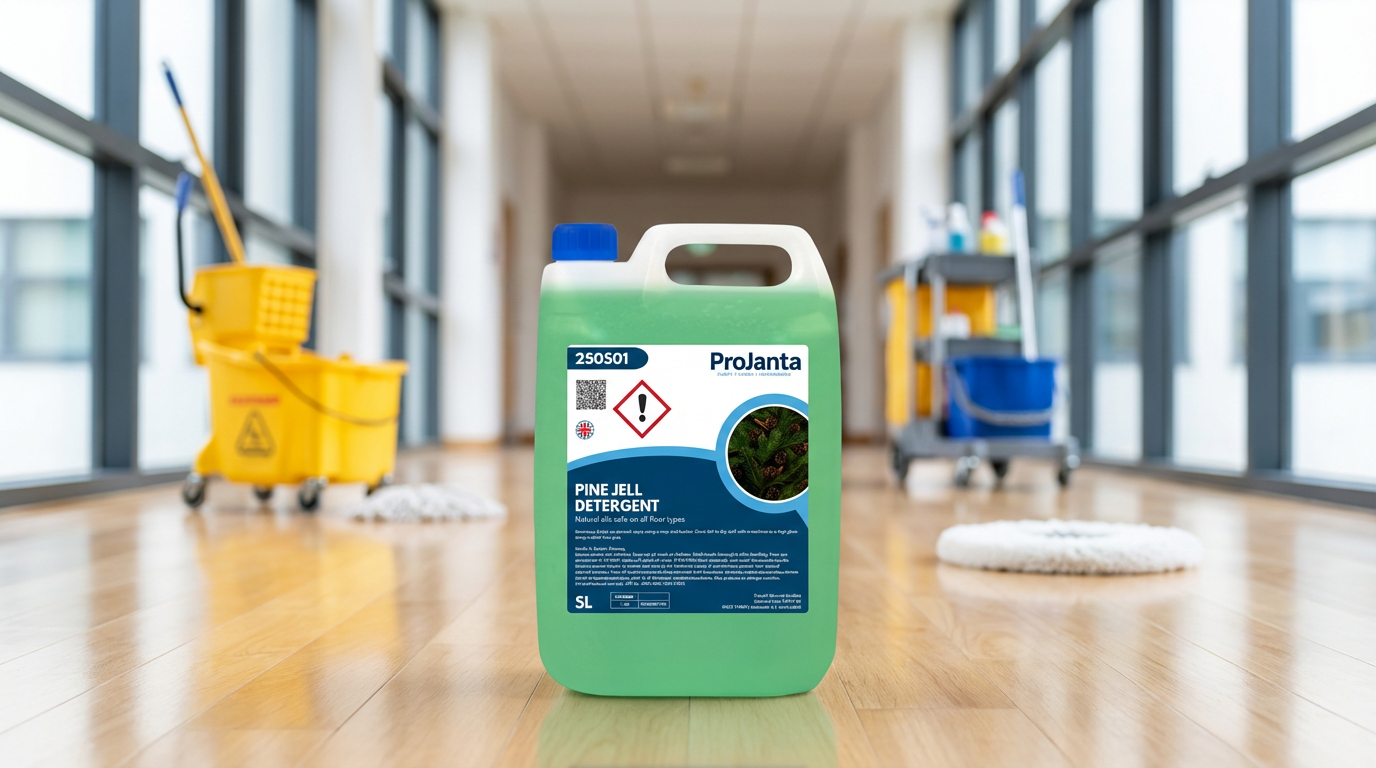
For the open floor itself, a neutral or multi-surface hard floor cleaner is usually the right base. Citrus’s floorcare pages position neutral and multi-surface cleaners for both manual and machine application, which makes them suitable for routine classroom and office floorcare. If you need a practical product example, Pine Jell is described on the site as a concentrated hard floor cleaner suitable for schools and offices, while Clover Ultrablend Floor Maintainer is designed for polished and unpolished hard floors and is effective against dirt, grime and rubber scuff marks. That does not mean every classroom needs a specialist formulation. It means your floorcare plan should match the soil and finish in front of you.
Washrooms, changing rooms and wet areas
Washroom floors need a different mindset. Moisture, traffic, scale and hygiene risk all combine in a way that ordinary classroom floorcare does not. Therefore, holiday cleaning in washrooms should focus on both build-up removal and slip control. Government school guidance recommends colour-coded equipment as good practice, and this is exactly where it matters most. Keep washroom tools separate from classroom tools, and use the holiday period to check that your mops, buckets and storage arrangements still support that separation.
You should also pay attention to drying times. HSE advises that smooth floors left damp by mopping can be extremely slippery, so access may need restricting until dry. In practical terms, that means cleaning in sections, using barriers or warning signage where needed, and avoiding the temptation to leave wet floors to “air out” in areas that will be reopened quickly. If you are cleaning a high-traffic washroom block before staff return, faster drying is not just convenient. It is part of the risk control.
Canteens, food tech rooms and staff kitchens
Floorcare in food areas usually fails for one reason, grease. A hallway cleaner will not always cope with a canteen floor that has seen weeks of spills, food debris and traffic. HSE advises using the right amount of the right product and allowing detergent enough time to work on greasy floors, which is especially relevant in kitchens and serving areas. As a result, your holiday floor cleaning checklist should separate food-related areas from general classroom cleaning and allocate a heavier-duty chemical or low-foam machine detergent where needed.
This is also one of the strongest cases for machine cleaning. Citrus groups scrubber dryer chemicals and machine detergents separately within its floorcare range, which reflects best practice. Greasy floors often need more than a quick pass with a wet mop. They need chemistry, agitation and recovery. Meanwhile, smaller spills during term should still be managed quickly without flooding the area, which is why day-to-day spill response and holiday deep cleaning should never be treated as the same task.
Sports halls, assembly spaces and other large open areas
Large, open hard floor areas often absorb the most visible wear. Sports halls, assembly spaces, reception zones and multi-use rooms see volume traffic, chairs dragged in and out, and equipment moved across the surface. Because of that, holiday periods are often the only sensible time to carry out a full machine scrub, assess the condition of the finish and decide whether the floor needs maintenance, restoration or simply better routine cleaning afterwards. Citrus’s machine pages position scrubber dryers as suitable for schools, universities, offices and large commercial spaces for exactly this reason.
At the same time, not every floor should be polished the same way. Citrus’s floorcare guidance separates cleaners, strippers, sealers and maintainers, and that is a useful framework for any B2B decision-maker. First you remove the soil. Then you restore the surface if the finish has failed. Finally, you protect it with the right maintenance cycle. Floor maintainers can prolong the life of polish layers, while polishes and sealers protect surfaces from scuffs and heavy wear.
The jobs most teams miss during a holiday deep clean
The most common missed tasks are usually the least visible ones during term. Edges, corners, skirting lines and fixed-unit borders often hold old polish, dust and grime, particularly in classrooms and corridors. Citrus’s edging tools page makes the point directly, standard machines and mops struggle to clean fully up to walls or into tight corners, which is why edging work needs its own line on the checklist.
The second missed area is pad and accessory selection. Floor pads are not interchangeable. On Citrus’s floor pad guidance, black pads are for wet stripping polish or seal, green pads for wet scrubbing sealed floors, blue pads for spray cleaning and black mark removal, red pads for spray buffing, and white pads for dry buffing to a high shine. Using the wrong pad can waste time, or worse, remove a finish you meant to preserve.
The third missed issue is equipment condition. Holiday cleaning is the right time to replace worn mop heads, check wringers and handles, and remove anything that makes cleaning less controlled. Citrus highlights colour-coded mop head options for hygienic cleaning, and its bucket systems include double-bucket options to keep clean and dirty water separate. If the tools are worn, cracked or inconsistent across the site, the chemistry alone will not fix the result.
Choosing the right floorcare products for schools and offices
For most schools and offices, the most practical stock list is not huge. It is balanced. In our experience, the most resilient floorcare setup usually includes:
- a neutral daily floor cleaner for routine maintenance
- a heavier-duty cleaner or degreaser for food areas and stubborn soil
- a disinfectant floor cleaner for higher-risk zones where appropriate
- colour-coded mop heads, buckets and wringers
- the correct floor pads for scrubbing, buffing or stripping
- a polish stripper, maintainer and sealer for floors with a managed finish
- a scrubber dryer or rotary machine where the footprint justifies it
That product mix also aligns with how Citrus structures its floorcare range. Instead of treating “floor cleaner” as one generic category, the site separates routine cleaners, machine detergents, disinfectant floor cleaners, polish systems and accessories. For procurement teams, that is the right way to think about floorcare before summer term. Different problems need different tools, but they still need to fit inside one manageable, repeatable system.
People also ask
How often should schools deep clean floors?
There is no single rule that suits every site. The right frequency depends on traffic, floor type, contamination and whether the floor has a maintained finish. However, term breaks are the most practical time for a genuine deep clean because HSE recommends quiet-hour cleaning for higher-risk floor tasks, and holiday periods allow access to empty rooms, corridors and larger open areas.
Is a scrubber dryer worth it for a school or office?
Usually yes, if you have a large hard-floor footprint or need quicker drying. Citrus’s scrubber dryer range is specifically aimed at schools, offices and other commercial sites, and the benefit is straightforward. One-pass scrubbing and drying improves productivity, reduces manual effort and shortens the period when floors remain slippery or out of use.
Should you strip and reseal every holiday?
No. Strip and reseal work is best done when the finish is genuinely failing, not simply because the calendar says so. Citrus’s floorcare guidance notes that maintainers can prolong the life of polish layers, while strippers are there to remove old coatings when restoration is needed. In practice, that means assessing wear, scuffing and cleanability before committing to a full refurbishment step.
Final thoughts
A strong school holiday floor care checklist does more than make buildings look ready for summer term. It helps reduce slip risk, extend floor life, improve presentation and support more consistent cleaning once staff and pupils return. The most effective plans are not overly complicated. They simply separate routine cleaning from true deep cleaning, match products to floor type and traffic, and use the holiday window to complete the jobs that are too disruptive during normal occupancy.
For schools, offices and other busy B2B sites, that is usually where the best results come from. Not from using more product, but from using the right floorcare system at the right time, with the right equipment, in the right areas. That practical approach is also why Citrus Cleaning Supplies structures its floorcare offer around surface type, task and workflow rather than one-size-fits-all cleaning.