






Schools are under increasing pressure to deliver high standards of hygiene while cutting waste, managing tight budgets, and meeting wider sustainability commitments. The good news is that eco-friendly school cleaning doesn’t have to mean compromising on infection prevention or practical outcomes. In fact, when sustainability is approached properly—through product rationalisation, controlled dosing, refill systems and smarter routines—schools often find they reduce waste and improve consistency.
This guide sets out proven, school-ready approaches to reducing waste in cleaning operations, with a focus on sustainable cleaning supplies for schools and practical changes your site team or contractor can implement without disruption.
Why waste reduction in school cleaning matters
Cleaning-related waste in education settings typically comes from three places:
- Packaging (small, single-use trigger bottles; wipes; pump dispensers; bin liners; cartons)
- Overconsumption (over-diluted or over-concentrated chemicals, excess paper towel use, unnecessary “double cleaning”)
- Short-life equipment (cheap mops, cloths, and dispensers replaced frequently)
Reducing this waste supports a school’s wider environmental goals, but it also delivers operational benefits that matter day-to-day:
- Lower cost-in-use through concentrates, controlled dosing, and fewer product lines
- Safer storage and handling by reducing chemical volumes and simplifying COSHH assessments
- Better standards because staff follow clearer routines with fewer products and less guesswork
- Improved wellbeing by choosing lower-odour, lower-VOC products and reducing airborne irritants
The most effective programmes treat sustainability as a systems change, not a “swap one bottle for another”.
What “eco-friendly” should mean in a school setting
A common misconception is that “green” simply means “plant-based” or “nice-smelling.” In professional cleaning, especially in schools, eco-friendly should mean:
- Fit for purpose: effective cleaning performance on the soils you actually have (food residue, tracked-in dirt, washroom scale, fingerprints).
- Reduced hazard profile: safer formulations where practical, supported by Safety Data Sheets (SDS) and appropriate COSHH assessments.
- Lower environmental impact: reduced packaging, better biodegradability, fewer problematic ingredients, and improved transport efficiency (e.g., concentrates).
- Evidence-backed claims: if it’s a disinfectant, it should be used correctly and have clear efficacy claims to recognised test standards (commonly BS EN standards in the UK market).
The biggest waste-reduction wins (without lowering hygiene standards)
1) Move from ready-to-use to bulk concentrates (with dosing control)
Switching from ready-to-use products to concentrated cleaners is one of the fastest ways to cut waste. A single concentrate can replace multiple trigger bottles over its life, reducing:
- Plastic packaging
- Transport emissions (less water shipped around)
- Storage space
- Frequency of deliveries
The critical success factor is controlled dosing. In schools, “glug-and-guess” dilutions create three problems:
- Waste through overuse,
- Poor results through underuse,
- Increased risk through inconsistent chemical strength.
Best practice options include:
- Wall-mounted dilution control units (ideal for caretakers’ cupboards)
- Pre-measured dosing caps/sachets for simpler sites
- Closed-loop concentrate cartridges where decanting risk needs to be minimised
If you want sustainability and consistent standards, dosing control is non-negotiable.
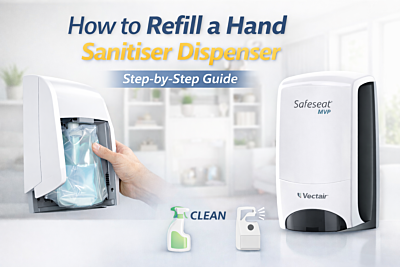
2) Introduce refillable dispensers across the site
Refill systems are particularly effective in washrooms and kitchens, where schools can inadvertently generate huge volumes of small plastic containers.
Consider refillable solutions for:
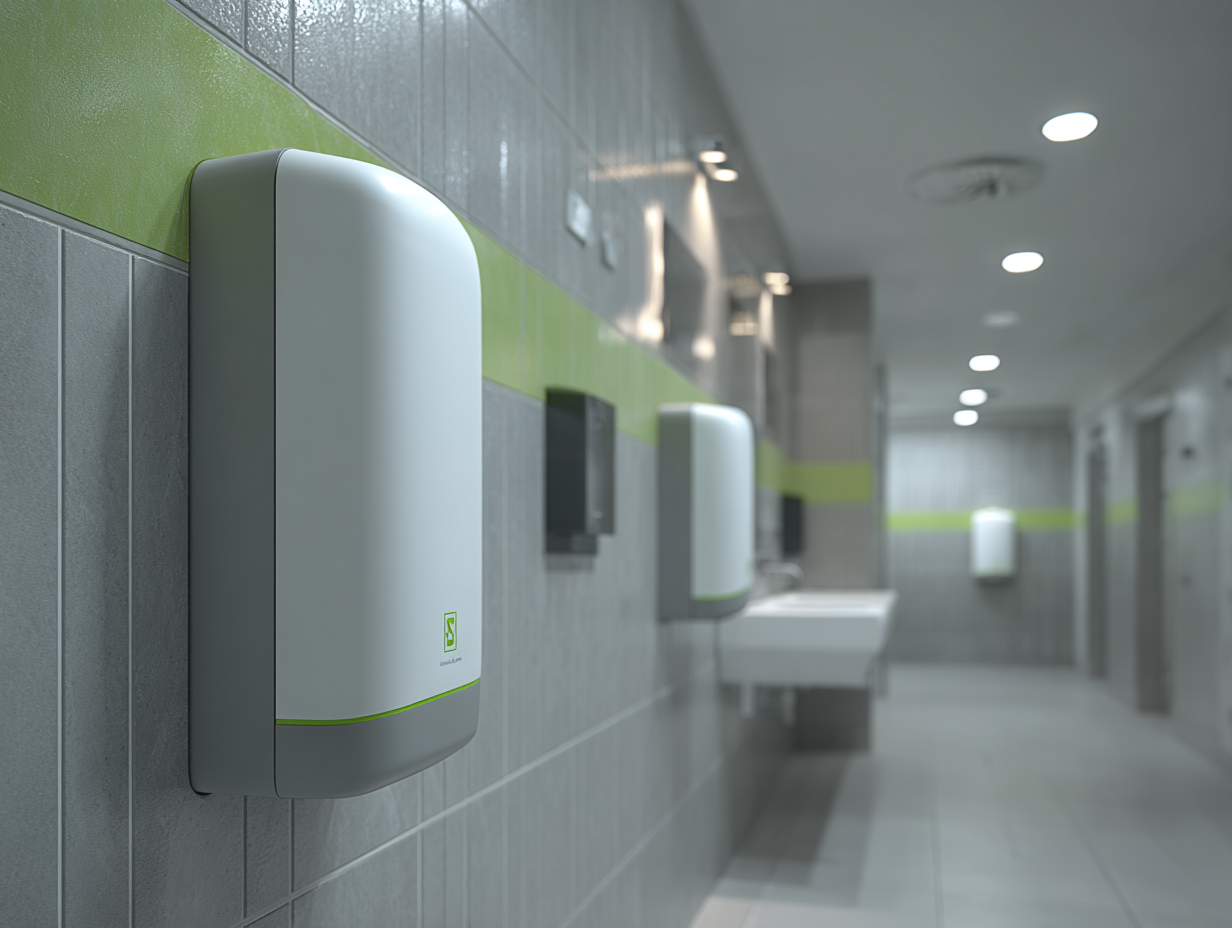
- Hand soap (cartridge or bulk-fill systems with lockable dispensers)
- Surface sanitiser points in staff areas
- Toilet tissue and hand towel dispensers designed for controlled consumption and reduced pilferage
A well-chosen dispenser system reduces waste in two ways:
- Fewer empty units in the waste stream
- Reduced over-dispensing (which drives both waste and cost)
For councils and academies managing multiple sites, standardising dispenser types also reduces maintenance complexity.
3) Standardise and rationalise your product range
Schools often accumulate too many products over time: different sprays for different rooms, half-used bottles, and “legacy” chemicals no one can properly explain.
Rationalisation reduces waste and improves compliance. A robust, simplified range typically includes:
- A neutral daily cleaner for most hard surfaces
- A heavy-duty degreaser for kitchens (used where needed, not everywhere)
- A washroom descaler/sanitiser for toilets and urinals
- A glass/multi-surface cleaner (or a single product proven for both)
- A laundry solution if reusable textiles are in rotation
- A disinfectant used on a risk basis, not as a universal substitute for cleaning
Fewer products means:
- Fewer deliveries
- Fewer part-used bottles
- Simpler training
- Easier COSHH management
Specialist suppliers who work with education sites, such as Citrus Cleaning Supplies, typically start sustainability projects with this kind of product mapping, because it delivers immediate waste and cost reductions while improving standards.
4) Replace disposable wipes with reusable microfibre (with the right controls)
Single-use wipes are a major waste stream, and they’re often used where a reusable option would do the job better.
A microfibre-led approach can:
- Reduce chemical use (microfibre mechanically lifts soil)
- Improve finish quality (especially on desks and touchpoints)
- Cut waste significantly
To do this safely, you need controls:
- Colour coding to prevent cross-contamination (e.g., toilets vs general areas)
- Defined laundering routines (temperature, detergent choice, and separation)
- Enough stock so staff don’t “make do” with dirty cloths
Sustainability isn’t just about “reusable”—it’s about reusability with a system.
5) Right-size consumables to reduce overuse
Small changes in consumables specification can have a big impact:
- Switch to controlled-dispense paper systems (reduces over-pulling)
- Choose quality bin liners appropriate to bin size (reduces double-bagging and splits)
- Use mop heads and pads designed for durability (not cheap items that shed fibres and fail early)
The aim is to reduce “hidden waste”: the extra consumables used because something doesn’t perform properly.
Choosing sustainable cleaning supplies for schools: what to look for
Look beyond marketing terms
“Eco”, “green”, and “natural” are not regulated terms in the way many people assume. Instead, look for:
- Clear ingredient and hazard information in the SDS
- Third-party environmental certifications (where available)
- Transparent dilution ratios and cost-in-use data
- Packaging strategy (concentrates, refills, take-back schemes)
If a supplier can’t explain how a product reduces waste and maintains performance, it’s not a professional sustainability solution.
Prioritise lower-impact formulations (where they make sense)
For most day-to-day school cleaning, lower-impact formulations are readily achievable:
- Low-fragrance or fragrance-free options for classrooms and corridors (helpful for sensitive pupils and staff)
- Low-VOC products to support indoor air quality
- Biodegradable surfactants and avoided “problem ingredients” where practical
- pH-neutral daily cleaners for broad surface compatibility
For washrooms and kitchens, choose products designed to work efficiently at the right dilution because efficient cleaning is sustainable cleaning.
Disinfectants: match them to risk, and use them correctly
A sustainable programme doesn’t ban disinfectants—it uses them intelligently.
Key principles:
- Cleaning comes first. Soil blocks disinfectant performance; routine cleaning is the foundation.
- Disinfect on a risk basis. High-touch points, clinical incidents, outbreak periods, or where required by policy.
- Follow contact time. Misused disinfectant is wasted disinfectant (and can create a false sense of security).
- Check efficacy claims. Professional disinfectants commonly reference recognised BS EN test standards for bactericidal/virucidal performance.
This approach protects hygiene outcomes while avoiding “blanket disinfection” that drives unnecessary chemical use and packaging waste.
Sustainable cleaning practices that reduce waste over the long term
Train for consistency (not just speed)
Waste is often a training issue disguised as a purchasing issue. High-performing schools standardise:
- Which product is used where
- Dilution method
- Cloth and mop rotation
- Touchpoint routines
- Storage and labelling
Short, practical training (15–30 minutes) backed by visual wall charts in cleaners’ cupboards can dramatically reduce misuse and waste.
Measure what you use: simple KPIs that work in schools
You don’t need complex software to improve sustainability. Start with a baseline and track:
- Concentrate litres used per month
- Number of trigger bottles purchased
- Paper towel cases per term
- Bin liner usage
- Washroom refill frequency
- Waste bag volume from cleaning stores
Even basic tracking highlights the biggest waste drivers quickly.
Align cleaning choices with whole-school sustainability goals
Cleaning is often overlooked in school sustainability plans, but it touches:
- Procurement and supplier selection
- Staff wellbeing
- Pupil health
- Waste and recycling outcomes
- Carbon and delivery impacts
Schools that get the best results involve:
- The site team and cleaning supervisor
- The school business manager
- Sustainability leads or eco councils (where appropriate)
- Local authority procurement teams (for multi-site alignment)
A practical 30-day plan for eco-friendly school cleaning
Week 1: Baseline and quick fixes
- Audit current products, equipment, and dispensers
- Identify top waste items (wipes, small bottles, excess paper)
- Remove redundant/duplicate products (with proper disposal controls)
Week 2: Pilot concentrates and controlled dosing
- Choose 1–2 high-use products to convert first (e.g., daily cleaner, washroom cleaner)
- Introduce dosing control and clear dilution signage
- Train staff on correct dilution and application
Week 3: Expand refills and reusable textiles
- Install or standardise refillable dispensers in priority areas
- Introduce a microfibre system with colour coding and laundering routine
- Confirm storage, labelling, and COSHH documentation is updated
Week 4: Standardise and lock in improvements
- Rationalise the product range across the whole site
- Set usage benchmarks and reorder points
- Build a simple termly review into the site schedule
A specialist education-focused supplier can accelerate this process by providing product mapping, dosing design, SDS/COSHH support, and on-site practical training—areas where Citrus Cleaning Supplies is well-positioned due to its focus on professional, repeatable systems rather than one-off product swaps.
People also ask: eco-friendly cleaning in schools
Are eco-friendly cleaning products effective in schools?
Yes, when you choose professional-grade formulations and pair them with correct dilution and method. Performance comes from the system: product selection, dosing, dwell time, and cloth/mop control.
Will sustainable cleaning supplies for schools meet hygiene requirements?
They can. Routine cleaning removes the majority of soil and contamination. Where disinfection is required, use a compliant disinfectant with clear efficacy claims and follow contact time guidance.
What’s the fastest way to reduce plastic waste from school cleaning?
Move high-volume products to concentrate with refill bottles and introduce refillable dispensers in washrooms. These changes typically eliminate the largest number of small plastic units quickly.
Do refillable systems create hygiene risks?
Not if managed correctly. Use lockable dispensers, follow manufacturer guidance, avoid “topping up” without cleaning where relevant, and ensure staff training is clear and consistent.
Bringing it all together
Sustainable school cleaning is not a single “eco product” decision; it’s a combination of waste prevention, controlled dosing, refill infrastructure, reusable systems and staff routines. Done properly, eco-friendly school cleaning reduces waste, strengthens compliance, and delivers a cleaner, healthier environment for pupils and staff.
If you want the changes to stick, focus on repeatable standards: fewer products, better controls, and a supplier approach that supports training, documentation, and consistency across the whole estate—exactly the kind of practical, education-ready support that specialist providers like Citrus Cleaning Supplies are known for.