







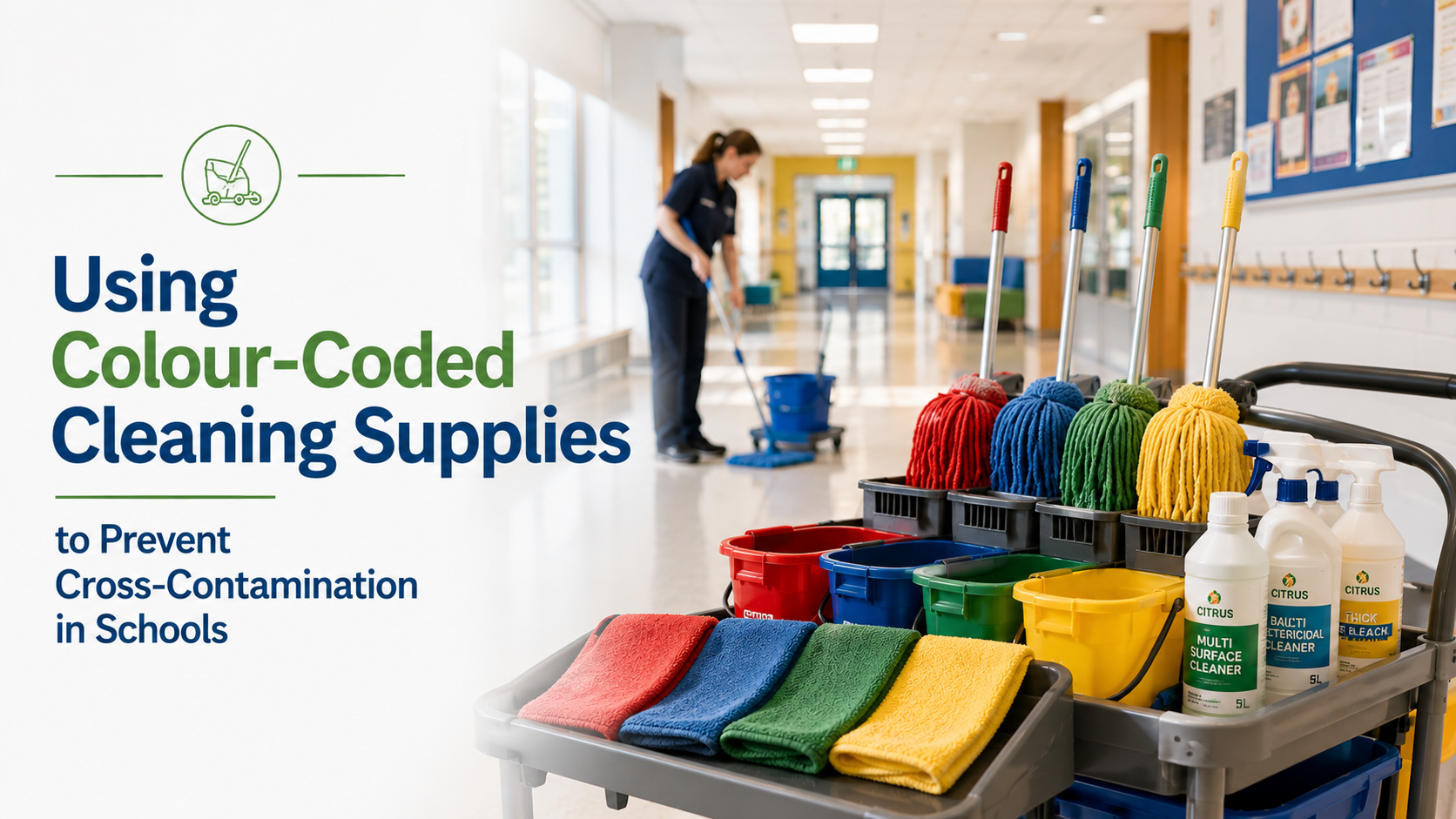
Using colour-coded cleaning supplies for schools gives site teams a simple visual system for keeping equipment in the right hygiene zone. A red cloth used around toilets should never move onto a classroom desk, while a green mop assigned to a kitchen should remain in food-related areas. That separation helps reduce the chance of dirt and microorganisms travelling around the building on reusable cleaning tools.
At Citrus Cleaning Supplies, we recommend building colour-coded cleaning supplies for schools into the whole routine, rather than limiting the system to a few cloths in a cupboard. Mops, buckets, wringers, sponges and storage all need to follow the same plan. When the colours stay consistent, staff can make quicker decisions and managers can spot errors before they affect hygiene standards.
What Cross-Contamination Looks Like in a School
Cross-contamination happens when cleaning equipment transfers contamination from one area or surface to another. For example, a mop used on a washroom floor could carry soil into a corridor if the team reuses it there. Similarly, a cloth used around basins should not then clean dining tables or classroom touchpoints.
Schools face a particular challenge because one cleaning shift may cover toilets, classrooms, offices, corridors and catering areas. Therefore, small mistakes can spread beyond a single room. Colour coding creates an immediate boundary between those tasks.
UKHSA guidance says that colour coding is not a legal requirement, but it is good practice in schools and childcare settings. It recommends separate equipment for kitchens, toilets, classrooms and offices, while reusable equipment should be disinfected after use.
What Do the Cleaning Colours Mean in Schools?
For education settings, the clearest starting point is the school-specific example used by UKHSA:
- Red: toilets and washrooms
- Yellow: hand-wash basins, sinks and related washroom surfaces
- Blue: general areas, including classrooms, offices and corridors
- Green: kitchens and food preparation areas
This system keeps high-risk sanitary fittings apart from lower-risk washroom surfaces. It also separates general learning spaces from catering areas, where food hygiene requires dedicated equipment.
Some sectors use slightly different colour charts. However, schools should avoid combining several systems because that creates uncertainty. Choose one approved site-wide chart, display it in every cleaning cupboard and use written labels or symbols alongside colour so the system remains accessible to all staff.
Which Cleaning Supplies Should Be Colour Coded?
A strong system of colour-coded cleaning supplies for schools includes every reusable item that could carry soil between areas. If only the cloths are colour coded but the same bucket travels from toilets to kitchens, the control is incomplete.
Microfibre Cloths
Colour-coded cloths are the easiest place to begin. Relevant options from our range include QUATTRO Heavy Weight Microfibre Cloths, Robert Scott Exel Microfibre Cloths and Vileda Breazy Microfibre Cloths. These give schools practical choices for daily wiping across desks, doors, counters and washroom surfaces.
Microfibre suits many routine tasks because its fine fibres lift and retain dust and soil. However, the colour still determines where the cloth belongs. A blue cloth may clean classroom desks, while red and yellow cloths stay within their assigned washroom zones.
Keep enough stock to rotate used cloths out immediately. Otherwise, staff may reuse the wrong colour simply because the correct one is unavailable.
Mop Heads and Handles
Floors cover large areas, so mops can move contamination quickly when teams use them in the wrong zone. Our floorcare range includes colour-coded mop heads and compatible handles that help cleaners identify equipment at a glance.
Use red mops for toilet and washroom floors, blue for classrooms and corridors, and green for kitchen or canteen floors. If your school uses yellow for sink-side areas, decide whether those floors need a dedicated yellow system or whether the approved red washroom-floor rule applies. Record that decision clearly rather than leaving staff to interpret it during a shift.
Buckets and Wringers
A colour-coded mop should have a matching bucket and wringer wherever possible. This prevents a clean mop head from entering water that has already been used in another hygiene zone.
Matching equipment also makes supervision easier. A red mop in a green bucket is immediately visible as an error. For larger sites, separate bucket-and-wringer sets can reduce delays because teams do not need to empty, disinfect and reassign one unit between incompatible areas.
Sponges, Scourers and Carry Trays
Smaller tools also need control. Ramon Hygiene Multi-Coloured Sponge Scourers can support area separation for compatible cleaning tasks, while a carry tray such as the SYR Plastic Carry Tray Blue helps keep general-area cloths and supplies together.
However, do not rely on the colour of one item inside a mixed trolley. Store each zone’s equipment in a dedicated tray, compartment or clearly labelled section.
Building a Colour-Coded Plan for Each School Area
The most useful colour-coded cleaning supplies for schools are the ones linked to a written area plan.
Classrooms, Corridors and Offices
Blue equipment usually covers general low-risk areas. This can include desks, door handles, reception counters, corridors and office furniture.
Provide blue microfibre cloths, a blue mop head, a matching bucket and any dedicated dusting tools. However, remove and replace the cloth whenever it becomes heavily soiled, and never take it into a toilet or kitchen.
Toilets, Basins and Changing Rooms
Washrooms need the clearest separation. Red equipment should stay with toilets, urinals and washroom floors. Meanwhile, yellow cloths can cover basins, taps, dispensers and related sink surfaces under the UKHSA school example.
Keep red and yellow items in separate trays, even when they sit on the same trolley. This reduces the risk of a cloth used on a toilet being picked up for a tap or dispenser.
Kitchens, Canteens and Food Technology Rooms
Green equipment should remain in food preparation and service areas. This includes suitable cloths, mops, buckets and scourers for kitchen floors, counters and back-of-house spaces.
Do not move green tools into staff toilets or general classrooms. Likewise, blue classroom cloths should not become temporary canteen cloths during a busy lunch service.
How to Implement the System Successfully
Buying colour-coded cleaning supplies for schools is only the first step. The system works when procurement, storage, training and daily supervision all support the same rules.
First, standardise the colour chart across the entire site. Multi-building schools and academy trusts should avoid giving each block a different interpretation. In addition, order enough spare cloths and mop heads to cover laundering, damage and peak cleaning periods.
Second, display a simple chart inside cleaning cupboards and on trolleys. Use both words and pictures, not colour alone. This helps new starters, temporary cleaners and staff who may have difficulty distinguishing certain colours.
Third, store equipment clean and dry after use. UKHSA advises that reusable cleaning equipment should be disinfected after each use. Damp cloths or mop heads left together can undermine an otherwise well-planned system.
Finally, keep chemical control separate from colour coding. Products should remain in their original labelled containers, and staff should follow COSHH assessments and manufacturer instructions. HSE guidance stresses that controls depend on the cleaning task and the substances used.
A Practical Colour-Coded Trolley Setup
For a general school cleaning round, we would organise colour-coded cleaning supplies for schools by zone rather than carrying loose equipment together.
A practical setup might include:
- A blue tray with blue cloths for classrooms and corridors
- A sealed red section for toilet cloths and small tools
- A separate yellow tray for basins and washroom touchpoints
- Green equipment stored on a dedicated catering trolley or in the kitchen
- Matching mop heads, handles and buckets for each floor zone
- Separate bags or containers for used reusable items
This approach makes the system visible. It also helps supervisors check compliance quickly at the beginning and end of a shift.
Common Mistakes That Weaken Colour Coding
Even well-stocked schools can lose control when day-to-day habits drift.
Common problems include:
- Using the nearest cloth instead of the correct colour
- Sharing one bucket between several zones
- Storing clean and used items together
- Allowing kitchen equipment onto a general cleaning trolley
- Failing to replace missing colours promptly
- Changing the colour chart without retraining staff
- Assuming colour coding replaces proper cleaning and disinfection
Regular spot checks are more useful than waiting for an audit. Check whether the right supplies are present, whether used items are separated and whether staff can explain the colour chart confidently.
People Also Ask
Is Colour-Coded Cleaning Compulsory in Schools?
No. UKHSA states that there is no legislative requirement to use a colour-coding system, but it recommends the approach as good practice for separating equipment between school areas.
What Colour Cloth Should Schools Use in Toilets?
Under the UKHSA example, red equipment is used for toilets and washrooms. Yellow is used for hand-wash basins and sinks, while blue covers general areas and green covers kitchens.
Should Mop Buckets Be Colour Coded Too?
Yes. Colour coding works best when matching mops, buckets, wringers and cloths stay within the same area. NHS cleanliness standards use the same principle across cleaning materials and equipment to reduce cross-contamination between different types of space.
How Should Reusable Cloths and Mops Be Managed?
Remove used items from service, disinfect or launder them according to the product and site procedure, then dry them fully before storage. Do not return damp or contaminated equipment to the clean section of a trolley.
Final Thoughts
A reliable system of colour-coded cleaning supplies for schools gives cleaning teams a clear visual rule for every task. Red, yellow, blue and green equipment can separate washrooms, basins, general spaces and kitchens, reducing the likelihood that reusable tools move contamination around the site.
At Citrus Cleaning Supplies, we recommend applying the system across cloths, mops, buckets, wringers, scourers and storage. Products such as QUATTRO and Robert Scott microfibre cloths, Vileda Breazy cloths, colour-coded mop equipment and organised carry trays can help schools build a practical setup from the cleaning cupboard to the trolley.
Ultimately, colour coding works because it makes the correct action easy to recognise. When schools combine suitable equipment with training, clean storage and regular checks, they create a more consistent and manageable approach to cross-contamination control.