






When a child is sick in a classroom or corridor, the next ten minutes matter. Norovirus spreads very easily, and a single spill can carry enough virus to infect many people. A calm, well-practised response keeps the spill contained, protects your staff and stops one case turning into an outbreak.
This guide explains how to handle a vomit or body fluid spill in a school, step by step. It also covers what to keep in your spill kit, where to store it and how to prepare your team before winter peaks. It is written for caretakers, cleaning teams, school business managers and facilities leads.
Why norovirus is such a problem in schools
Norovirus is a common stomach bug. It causes sudden vomiting and diarrhoea, and it is at its most active in the colder months. Schools suit it well. Children share toys, tables, toilets and hands, and they are close together for most of the day.
The virus also survives on surfaces. A spill that is left, or cleaned badly, can leave virus behind on floors, furniture and fittings. Droplets can spread when someone vomits, which is why a spill is more than a mess on the floor. Prompt, careful clean-up protects everyone who comes into the area next.
The first few minutes: contain and clear the area
Speed matters, but so does staying calm. Follow the same order every time.
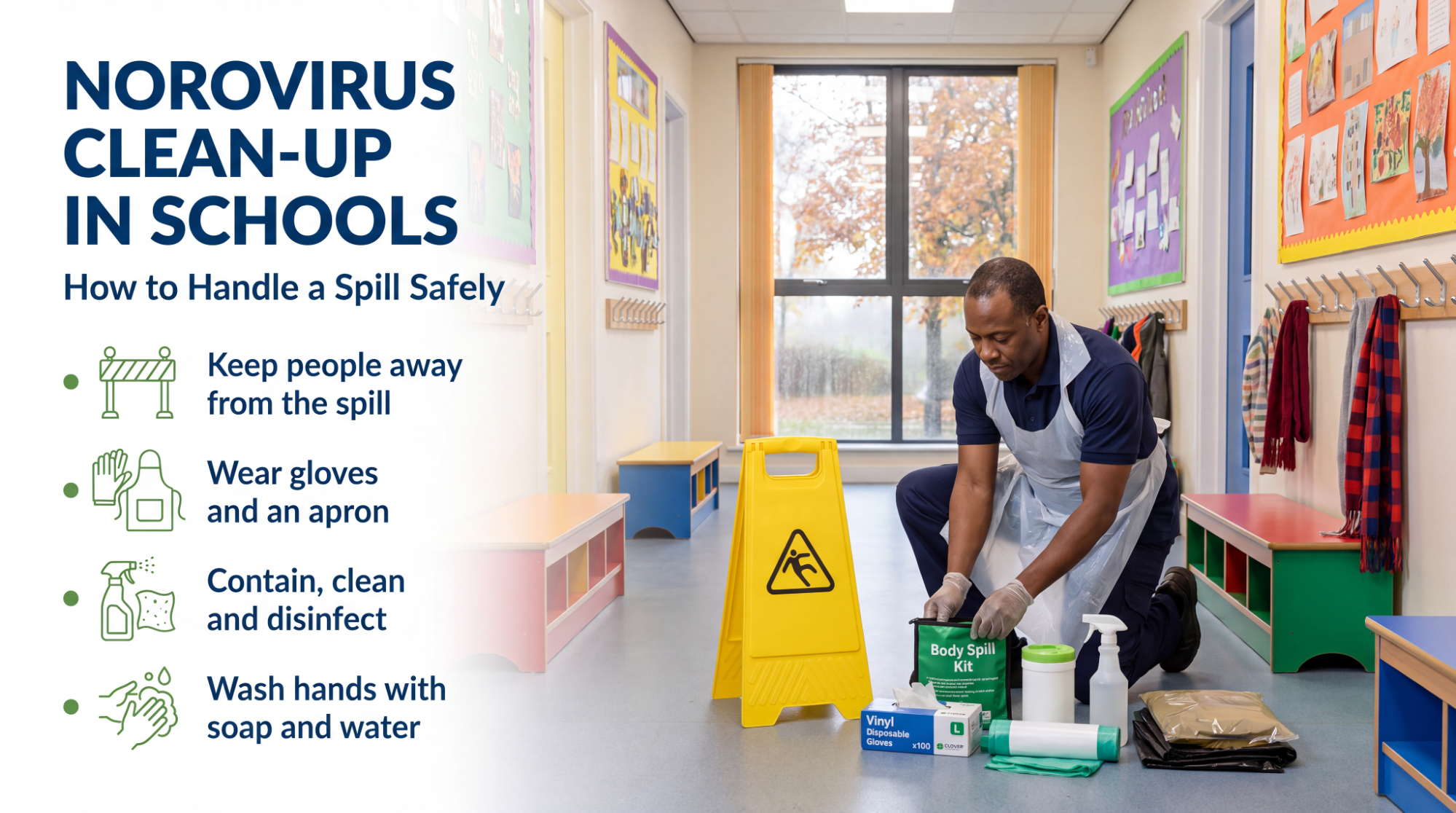
First, keep people away. Ask pupils and staff to move back from the spill, and keep the area clear until it is fully cleaned. Look after the child who is unwell, and arrange for them to go home or to a quiet area, following your school's policy.
Second, fetch the spill kit and the right protective equipment. Do not try to clean up without it. Staff who deal with a spill need disposable gloves and an apron at the very least. Your own policy may also call for a mask or eye protection, so check it and make sure your stock matches.
Third, put out a warning sign so nobody walks into the area while you work. Citrus lists warning signs within its First Aid and Healthcare range.
How to clean up a vomit or body fluid spill
Your school should have a written procedure, and your local health protection team or UKHSA guidance comes first. The steps below show the typical order of a clean-up. Check them against your own procedure before you use them.
Step 1: Put on PPE. Wear disposable gloves and an apron before you touch anything. Add other protection if your policy asks for it.
Step 2: Cover the spill. Use absorbent material, such as the powder in a spill kit or disposable paper towels, so the liquid is contained and the virus is not spread further. Follow the instructions on the product for how long to leave it.
Step 3: Remove the waste. Scoop up the absorbed material with the tools in the kit, and place it in a sealed bag. Do not wipe in a way that spreads the spill outwards.
Step 4: Clean the area. Use detergent and water to clean the surface. Cleaning removes the dirt that stops disinfectant working properly.
Step 5: Disinfect the area. Apply a disinfectant that is suitable for use against norovirus. Check the product label for the claims it makes, and follow the instructions for dilution and contact time. Do not mix products.
Step 6: Dispose of waste and equipment. Seal all waste in bags, and dispose of it according to your school's policy. Clean or discard cloths and equipment as directed.
Step 7: Remove PPE and wash hands. Take off gloves and apron carefully, put them in the waste bag, and wash your hands thoroughly with soap and water.
Afterwards, leave the area closed until it is dry. Open a window if you can, to help ventilation.
Why soap and water matters
Handwashing with soap and water is the recommended way to protect against norovirus. Alcohol gel does not work as well against it, so sanitiser should not replace washing. Staff who have cleaned up a spill should wash their hands even if they wore gloves. Pupils should wash their hands after using the toilet and before eating.
Keep soap and paper towels stocked in every washroom, and check them often through the winter. A washroom with an empty dispenser at the wrong moment undermines every other precaution.
What to keep in a school spill kit
A good kit lets staff act quickly without hunting for supplies. Citrus lists a Body Spill and Sharps Kits subcategory within its First Aid and Healthcare range. Check the contents of any kit against your own procedure before you order, and make sure staff know how to use it.
Whether you buy a ready-made kit or build your own, it should cover the key points. You need something to absorb and contain the spill, tools to scoop it up and sealable bags for the waste. You also need protective equipment for the person cleaning, and a way to clean and disinfect afterwards.
Citrus lists several items you can use to build or top up a kit. These include disposable gloves and aprons, wet and dry wipes and warning signs, all within its First Aid and Healthcare range. Its Specialist Chemicals page lists disinfectants, sanitisers and antimicrobial cleaners. Listings include dilution ratios and health and safety information, and it refers to the standards BS EN 1276 and BS EN 13697. Check which standards and claims apply to your own situation, and ask your supplier if you are unsure which product suits norovirus clean-up. Citrus also lists a Sacks, Bins and Litter category for waste, so check the current range for the right strength and size.
Where to store spill kits
A single kit locked in the office is no use when a child is sick at the far end of the school. Spread kits around the building. Good places include the main office, the dining hall, the PE area, the early years classrooms and the washrooms. Make sure every member of staff knows where the nearest kit is.
Check the kits regularly. Look at the contents, the expiry dates and the condition of the packaging. Restock straight after any use, because a kit that is half empty when you need it is a serious problem.
Train your team before you need them
A kit only works if people know how to use it. A short, practical briefing at the start of winter makes a big difference. Walk staff through the procedure, show them where the kits are kept, and let them handle the contents. Practice builds confidence, and confidence makes the response faster and safer.
Include lunchtime supervisors, teaching assistants and agency staff. They are often the first people on the scene. Make sure they know who to call, such as the caretaker or cleaning lead, and what to do while they wait. A one-page guide pinned in each area gives a quick reminder.
Review the procedure after any incident. If staff could not find a kit, or if a product did not suit the job, fix it before the next spill.
Soft furnishings, carpets and hard-to-clean surfaces
Not every spill lands on a smooth floor. Carpets, soft seating and fabric items need extra care. Vomit soaks in, and it can be hard to disinfect fully. Follow your supplier's advice and the product instructions for soft surfaces. Some items may need laundering at a high temperature, and some may need to be thrown away if they cannot be cleaned properly.
Check what your procedure says about this ahead of time. A plan made in the middle of an incident is rarely the best one.
Look after the wider site during an outbreak
If several pupils or staff are unwell, step up cleaning of touch points. Door handles, taps, toilet flushes, handrails and shared equipment all need extra attention. Increase the frequency, and use wipes for quick clean-ups between full cleans.
Keep a note of where and when spills happened and what supplies were used. A simple log shows you which areas need more kits, and it helps if anyone asks how you responded. It also tells you how much to order for the rest of the winter.
What about exclusion and reporting?
Schools usually ask staff and pupils with sickness or diarrhoea to stay away until they have been symptom-free for a set period. Current guidance changes from time to time, so check the latest advice from UKHSA and your local health protection team. They will also tell you when to report an outbreak.
This guide covers cleaning and supplies, not clinical advice. Always follow your own infection control policy and current guidance from the relevant health authorities.
Plan your order early
Demand for spill kits, gloves, disinfectant and wipes rises sharply once cases appear locally. Order in October and early November, before the peak. Hold a buffer of the fastest-moving items. Review your use from last winter, and increase your order if you ran short.
FAQ
How do you clean up vomit in a school? Keep people away and put on gloves and an apron. Cover the spill with absorbent material, scoop it into a sealed bag, clean with detergent and water, then disinfect. Finish by removing PPE and washing hands with soap and water.
What should be in a school spill kit? Absorbent material, scoops, sealable bags, gloves, an apron, and a way to clean and disinfect. Check the contents against your own procedure before you order.
Does hand sanitiser kill norovirus? Alcohol gel does not work as well against norovirus as it does against some other germs. Wash with soap and water, and use sanitiser only when you cannot reach a sink.
Who should clean up a body fluid spill? Someone who has been trained, has the right PPE and follows your school's procedure. Make sure lunchtime and agency staff know who to call.
Where should spill kits be kept? In every area where a spill is likely, such as the dining hall, early years rooms, PE areas and washrooms. A single kit in the office is too far away.